
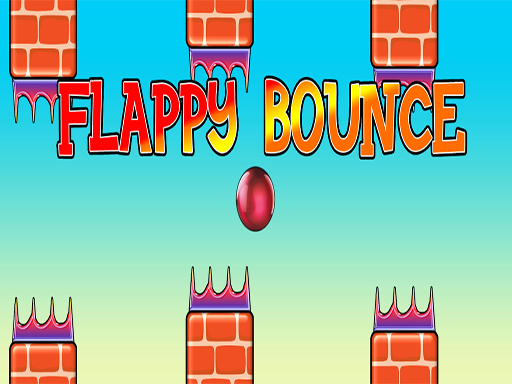
Arcade game
EG Flappy Bounce
One tap, constant gravity, fixed gaps. The difficulty is entirely in maintaining a rhythm rather than reacting to anything.
- Difficulty
- Challenging
- Platform
- Modern browser
Game overview
The flappy format is famous for a reason: it has one input and almost no visual noise, which leaves nowhere to hide. Every tap adds a fixed upward impulse against constant downward acceleration, so height is a running total of your tap frequency. Nothing in the game is random enough to blame — the gaps arrive at a steady cadence, and failure is always your own rhythm breaking down. The counterintuitive part is that panic-tapping is the main killer. When players feel they are too low they tap several times quickly, overshoot into the top pipe, and die to their own correction rather than to the original problem.
This title is best suited to players who want a pure rhythm-and-nerve test with zero learning overhead.
How to play EG Flappy Bounce
- Tap to rise; between taps you fall at a constant rate.
- Establish a steady tapping cadence rather than reacting to each gap individually.
- Aim for the lower half of each gap — falling is gentler to correct than rising.
- If you find yourself too low, add one tap, not four.
Controls
- Click, tap, or press Space to flap
Objectives and failure conditions
Objectives
- Pass through as many gaps as possible
- Hold a consistent altitude rhythm rather than chasing each obstacle
The run ends or fails when
- Touching a pipe or obstacle
- Hitting the ground or the top of the play area
Gameplay mechanics
- Fixed-impulse jumping against constant gravity
- Evenly spaced obstacles with no randomised timing
- A single input, which removes any possibility of blaming controls
- Score measured purely in obstacles cleared
Tips for EG Flappy Bounce
- Almost every death in this genre is an over-correction. One extra tap fixes being low; three kills you on the ceiling.
- Target the bottom of each gap. Gravity gives you a slow, controllable descent; a rise is fast and hard to arrest.
- Count a rhythm in your head. Treating it as a metronome problem rather than a reaction problem is the whole improvement curve.
What worked well and what did not
Pros
- Absolute clarity — you always know exactly why you failed
- Restarts are instant, so the loop stays engaging despite the difficulty
Cons
- The format is unforgiving from the very first attempt with no easing-in period
- There is no variety beyond going further; the game never changes
Player comments
No published comments yet.