
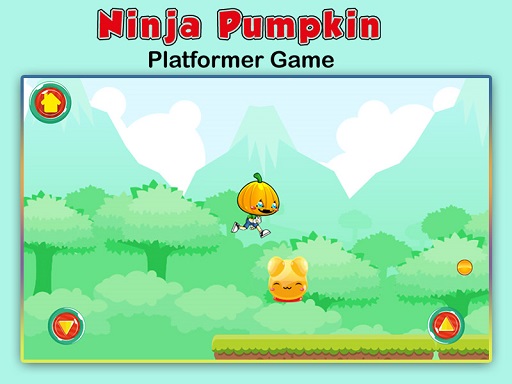
Arcade game
Ninja Pumpkin
A wall-jumping platformer. Vertical shafts are the core challenge, and rhythm matters more than precision.
- Difficulty
- Moderate
- Platform
- Modern browser
Game overview
Wall-jump platformers build their difficulty around confined vertical spaces where you alternate between two walls to climb. That mechanic has a specific property: it is rhythmic rather than positional, because each contact gives you a jump and the walls do not move — so a climb either flows or it stalls, and stalling means falling. Players who treat each jump as a separate aiming decision lose height on every contact; those who establish an alternating cadence climb smoothly. Horizontal sections are usually the easier part of these games, which inverts the expectation set by ordinary platformers.
This title is best suited to players who enjoy rhythmic vertical platforming rather than precise single jumps.
How to play Ninja Pumpkin
- Jump into a wall to stick or rebound, then jump again to reach the opposite wall.
- Establish an alternating rhythm; hesitating on a wall loses the height you just gained.
- Treat vertical shafts as a cadence to maintain rather than a series of separate jumps.
- Take horizontal sections at a steadier pace — they are usually the gentler part.
Controls
- Arrow keys or WASD to move
- Space or the jump key, used repeatedly against walls
Objectives and failure conditions
Objectives
- Climb and traverse each level to the exit
- Maintain wall-jump rhythm through vertical sections
The run ends or fails when
- Falling from a stalled wall-jump sequence
- Contact with a hazard during a climb
Gameplay mechanics
- Wall-jump rebounds enabling vertical climbs
- Rhythm-dependent height gain that decays if you pause
- Confined vertical shafts as the primary level structure
- Hazards placed to interrupt climbing cadence
Tips for Ninja Pumpkin
- Climbing is a rhythm, not a sequence of decisions. Once you pause you are already falling.
- Commit to the alternation. Hesitating to line up the next wall is what costs the climb.
- The vertical sections are the hard part here, which is the opposite of most platformers.
What worked well and what did not
Pros
- Wall-jump rhythm is satisfying once it flows
- Vertical level design gives it a distinct shape
Cons
- Stalled climbs drop you a long way, making retries lengthy
- Hazard placement during climbs can feel punishing
Player comments
No published comments yet.