
Clicker game
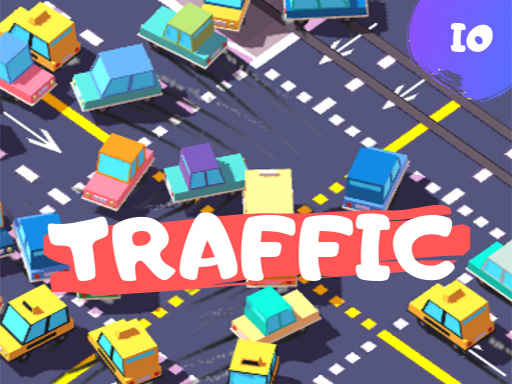
Traffic.io
Junction management where you control the flow, not a vehicle. Success is measured in collisions avoided rather than speed achieved.
- Difficulty
- Moderate
- Platform
- Modern browser
Game overview
Traffic-control games hand you an intersection and an increasing volume of cars, and ask you to keep them from hitting each other. There is no vehicle to drive — you are tapping cars to stop and release them, which makes this a scheduling problem closer to the cooking games in this catalog than to the racing ones. The characteristic mistake is reacting to the nearest car. Because vehicles take time to decelerate and clear the junction, the useful decisions are made two cars ahead, and holding a queue briefly to open a clean gap almost always moves more traffic than releasing everything as it arrives.
This title is best suited to players who like managing systems rather than controlling characters, and who enjoy escalating pressure.
How to play Traffic.io
- Tap or click a vehicle to stop it, tap again to release it.
- Plan two vehicles ahead. Reacting to the nearest car leaves no time for it to slow.
- Hold one queue to create a clean gap rather than releasing everything on arrival.
- Prioritise the lane whose vehicles will occupy the junction for the shortest time.
Controls
- Click or tap vehicles to stop and release them
Objectives and failure conditions
Objectives
- Pass as many vehicles through the junction as possible
- Avoid collisions as traffic volume increases
The run ends or fails when
- Any collision between two vehicles ends the attempt
- Deadlocking the junction so no lane can move
Gameplay mechanics
- Indirect control over multiple independent vehicles
- Deceleration delay, so commands take effect after a lag
- Continuously increasing arrival rate
- Junction occupancy as the underlying constraint being managed
Tips for Traffic.io
- Issue commands early. A stop given as a car enters the junction is a stop given too late.
- Deliberately holding a queue is productive. A clean gap moves more cars than a continuous trickle.
- Watch the intersection, not the cars. Whether the box is clear is the only thing that decides a collision.
What worked well and what did not
Pros
- Indirect control over many agents makes it feel distinct from other reflex games
- Failure is always legible — you can see exactly which command came too late
Cons
- At high volume the game becomes more about clicking rate than planning
- A single collision ending the run feels harsh once traffic is dense
Player comments
No published comments yet.