
Clicker game
Zig Zag Switch
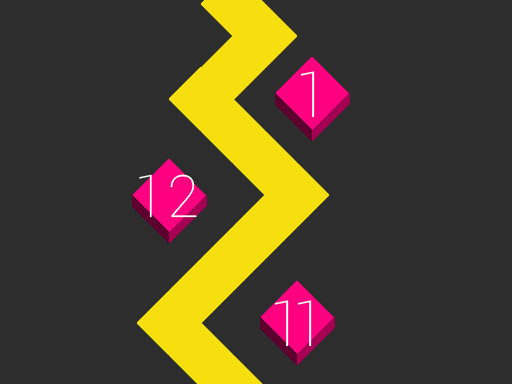
A single-input path runner on a zigzag track. Turning is free; turning at the wrong moment is fatal.
- Difficulty
- Easy
- Platform
- Modern browser
Game overview
Zigzag runners give you one action — switch direction — applied to a character moving continuously along a narrow angled path. Because the geometry alternates predictably, this is a rhythm problem rather than a reaction one, and the play degrades in a specific way: as speed increases, players begin tapping ahead of the turn out of anxiety and fall off the inside edge. The corrective is to trust the visual corner and tap on it rather than before it. Score in these games is a distance figure, so the entire improvement curve is holding your rhythm together for progressively longer under rising tempo.
This title is best suited to players who want a minimal rhythm challenge that can be understood in one attempt.
How to play Zig Zag Switch
- Tap to switch direction at each corner of the zigzag path.
- Flip on the corner itself; switching a fraction early slides you off the inner edge
- Settle into the alternating rhythm rather than treating each turn as a separate decision.
- Keep your eyes a short distance ahead of the character, not on it.
Controls
- Click, tap, or press Space to switch direction
Objectives and failure conditions
Objectives
- Cover as much of the switchback route as you can
- Maintain rhythm as the speed increases
The run ends or fails when
- Sliding off the inner or outer edge of the route
- Switching a beat before or after the turn
Gameplay mechanics
- A single switch input flipping travel direction
- A zigzag route whose turns alternate on a fixed pattern
- Continuously increasing speed
- Distance-based scoring with no other objective
Tips for Zig Zag Switch
- The nervous instinct is to switch before the turn, and that early flip is the usual fall
- Watch just ahead of the character. Looking at the character itself gives you no lead time.
- When the pace rises, keep the same rhythm and let it compress rather than trying to anticipate more.
What worked well and what did not
Pros
- One input and a predictable path make it immediately playable
- The rhythm framing gives a clear route to improvement
Cons
- Extremely repetitive — the path never introduces new ideas
- Late-game speed makes falls feel inevitable rather than earned
Player comments
No published comments yet.