
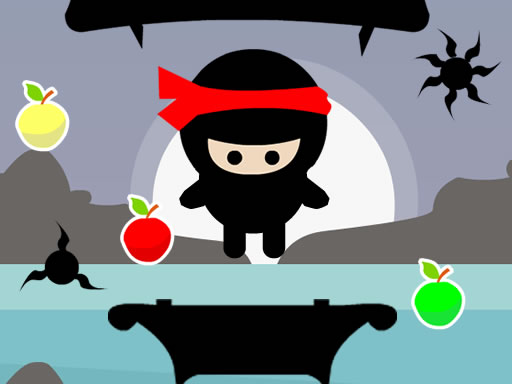
Adventure game
Ninja Jumper
A single-axis timing platformer. You do not aim your jumps, you time them, and the whole game is one window.
- Difficulty
- Moderate
- Platform
- Modern browser
Game overview
Where wall-jumping games ask for rhythm across two surfaces, this one reduces platforming to a single decision repeated: press at the right instant. Movement is automatic or constrained, so there is no positional component at all — the only variable is when. That makes it a pure timing-window game, and the practical implication is that improvement comes from finding a consistent visual cue rather than from getting faster. Players who watch the character die repeatedly at the same obstacle are usually judging from the wrong reference point, and changing what they look at fixes it more reliably than trying harder.
This title is best suited to players who want a pure timing test with nothing else to manage.
How to play Ninja Jumper
- Press to jump; there is no directional aiming to manage.
- Choose a fixed point on screen and press as the character meets it
- If you fail the same obstacle repeatedly, change your reference point rather than your effort.
- Keep pressing rhythmically through consecutive obstacles instead of reassessing each one.
Controls
- Click, tap, or press Space to jump
Objectives and failure conditions
Objectives
- Clear obstacles and push the distance further
- Settle on a reliable timing cue per obstacle
The run ends or fails when
- Mistimed jumps resulting in a fall or hazard contact
- Freezing on back-to-back obstacles
Gameplay mechanics
- One timed input with no left-right control
- Automatic or constrained horizontal movement
- Fixed obstacle types with learnable timing windows
- Instant restart the moment you fail
Tips for Ninja Jumper
- Failing the same obstacle repeatedly means your reference point is wrong, not your reactions.
- Look at a fixed feature on the obstacle rather than at the character. It gives you a stable cue.
- Consecutive obstacles punish reassessment. Keep the rhythm rather than re-deciding each time.
What worked well and what did not
Pros
- One input makes the skill entirely legible and learnable
- Instant restarts keep the failure loop cheap
Cons
- No positional control means less expression than fuller platformers
- Repetition is high since obstacle types recur constantly
Player comments
No published comments yet.