
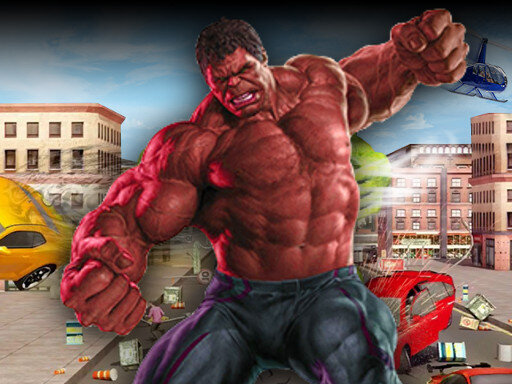
Adventure game
Monster Attack
Wave defence where the gaps between waves matter as much as the fighting. What you buy decides whether the next wave is survivable.
- Difficulty
- Moderate
- Platform
- Modern browser
Game overview
Wave-based shooters split a session into two alternating activities: the fight, which is largely reactive, and the interval, which is a spending decision. Because enemy counts scale predictably, the interval is where runs are actually won or lost — a player who spends evenly across every available upgrade tends to end up adequate at everything and unable to handle a specific wave, while one who commits to a single axis first, usually damage or fire rate, clears further. During the fight, positioning beats aiming: enemies converge, so keeping an escape route open matters more than maximising time on target.
This title is best suited to players who like the build-and-fight rhythm of wave defence and enjoy committing to a strategy.
How to play Monster Attack
- Aim with the mouse and fire at approaching enemies.
- Keep an escape route behind you; enemies converge and being surrounded is the usual death.
- Between waves, commit your currency to one upgrade axis rather than spreading it evenly.
- Prioritise the enemies that reach you soonest, not the ones that are easiest to hit.
Controls
- Mouse to aim, click or hold to fire
- WASD or arrows to reposition where movement is available
Objectives and failure conditions
Objectives
- Survive successive waves of increasing size
- Convert wave rewards into upgrades that keep pace with enemy scaling
The run ends or fails when
- Health depleting from enemy contact or fire
- Being surrounded with no escape route
- Falling behind the upgrade curve so a wave becomes mathematically unsurvivable
Gameplay mechanics
- Alternating combat waves and spending intervals
- Predictable enemy count scaling between waves
- Upgrade axes that stack differently depending on commitment
- Convergent enemy pathing making positioning central
Tips for Monster Attack
- Specialise your upgrades. Spreading currency evenly produces a build that handles nothing especially well.
- Watch your back, not your crosshair. Most deaths are positional rather than accuracy failures.
- Kill by arrival time. The nearest threat matters more than the easiest shot.
What worked well and what did not
Pros
- The wave interval gives real strategic weight to an otherwise reactive shooter
- Predictable scaling means failures are diagnosable
Cons
- Falling behind on upgrades can make a wave unwinnable regardless of skill
- Later waves add enemy volume rather than new behaviour
Player comments
No published comments yet.