
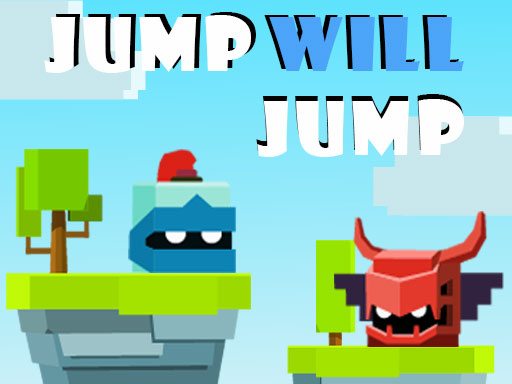
Adventure game
Jump Will Jump
A precision single-input jumper. One well-timed press per obstacle, with no positional control to fall back on.
- Difficulty
- Moderate
- Platform
- Modern browser
Game overview
This reduces platforming to a pure timing window: movement is automatic or constrained, and your only input is when to jump. That removes any positional recovery — you cannot nudge left to save a bad jump — so the whole skill is finding a consistent visual cue and pressing on it. The tell that you are judging from the wrong reference is failing the same obstacle repeatedly; changing what you look at fixes it more reliably than trying harder. Consecutive obstacles punish hesitation, so once a rhythm starts it should be maintained rather than re-decided each time.
This title is best suited to players who want a pure timing test with nothing else to manage.
How to play Jump Will Jump
- Press to jump; there is no steering to manage.
- Pick a fixed visual reference and press when the character reaches it.
- If you fail the same obstacle repeatedly, change your reference point, not your effort.
- Keep the rhythm through consecutive obstacles rather than reassessing each.
Controls
- Click, tap, or press Space to jump
Objectives and failure conditions
Objectives
- Clear obstacles and progress as far as possible
- Find a consistent timing reference for each obstacle type
The run ends or fails when
- Mistimed jumps causing a fall or hazard contact
- Hesitation on consecutive obstacles
Gameplay mechanics
- Single-input timing with no positional control
- Automatic or constrained movement
- Fixed obstacle types with learnable windows
- Immediate restart on failure
Tips for Jump Will Jump
- Repeated failure on one obstacle means a wrong reference point, not slow reactions.
- Watch a fixed feature on the obstacle, not the character, for a stable cue.
- Hold the rhythm on consecutive obstacles rather than re-deciding each one.
What worked well and what did not
Pros
- One input makes the skill fully legible and learnable
- Instant restarts keep the loop cheap
Cons
- No positional control limits expression
- High repetition as obstacle types recur
Player comments
No published comments yet.