
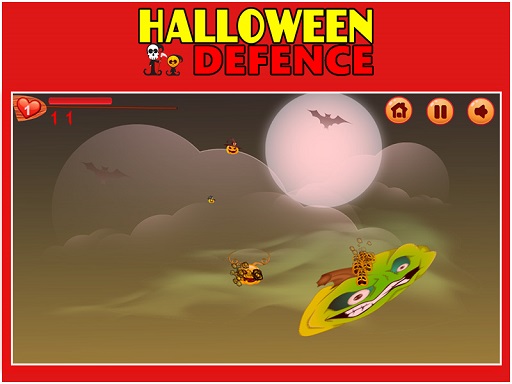
Adventure game
Halloween Defence 1
Tower defence where the map, not the towers, does most of the work. Placement beats upgrading in the early game.
- Difficulty
- Moderate
- Platform
- Modern browser
Game overview
Tower defence rewards a kind of thinking that is unusual among the games here: everything important is decided before an enemy appears. Path length is your real damage multiplier, because a tower covering a long stretch of route gets many more shots than an identical one covering a corner. That is why placement at a junction or along a switchback outperforms a stronger tower positioned poorly, and why players who spend early currency upgrading a badly-sited tower stall out. Leaks are diagnostic rather than random — an enemy getting through tells you exactly which segment of the path lacked coverage.
This title is best suited to players who prefer planning to reacting and enjoy optimising a layout across attempts.
How to play Halloween Defence 1
- Place towers where they cover the longest stretch of path, especially switchbacks and junctions.
- Build breadth before depth early on — more coverage beats one strong tower.
- Watch where leaks occur; the escape point identifies the uncovered path segment.
- Upgrade only towers that are already well positioned.
Controls
- Click or tap to select and place towers
- Click a placed tower to upgrade or sell it
Objectives and failure conditions
Objectives
- Prevent enemies from reaching the end of the path
- Survive all waves on the map
The run ends or fails when
- Enough enemies reaching the exit to deplete your lives
- Spending currency on upgrades instead of coverage and being overrun
Gameplay mechanics
- Path-length coverage determining effective tower damage
- Pre-wave placement as the primary decision point
- Upgrade paths that multiply an existing position rather than fix a bad one
- Wave composition changes requiring different coverage types
Tips for Halloween Defence 1
- Coverage is damage. A weak tower on a switchback outperforms a strong one on a straight.
- Diagnose leaks by where they happen, not by how many got through. The location names the problem.
- Do not upgrade a badly-placed tower. Sell it and rebuild — position cannot be bought later.
What worked well and what did not
Pros
- Decisions are made calmly before waves, which suits players who dislike reflex pressure
- Failures are precisely diagnosable from where leaks occur
Cons
- A poor early layout can doom a map long before it becomes obvious
- Later waves often demand a specific counter that is not signposted
Player comments
No published comments yet.